Evolving Preply’s booking ecosystem

 Preply


 preply.com/schedule



Booking drives Preply’s subscription
Subscribers pair with a tutor on a monthly plan where unused credits expire at renewal. Outside simple single bookings, three gaps cost learners lessons and drove churn: empty tutor calendars (~31% of exits), hidden balance and rigid reschedules (multi-lesson edits fell from 67% to 47%), and dropped month-1 habits.
Across seven connected initiatives, I helped turn isolated patches into one cohesive booking system.
Measurable lift across retention and booking depth
Learners hitting zero open slots stayed active at a higher rate (scaled across ~144k subscribers).
Fewer plans deleted once learners could skip one week cleanly, lifting scheduled hours by +2.2%.
Nearly half of tutor-rescheduled lessons confirmed in two taps inside chat.
Always a next lesson
I built an AI-assisted prototype to align leadership around one thesis: a learner with a next lesson stays. It paired upfront weekly scheduling with shared calendar habits, notes, and clear renewals.
Preplypreply.com/scheduleTurn a new subscription into a weekly habit: celebrate the start, scan two quick tips, and book recurring slots.
Unblocking learners when a tutor has no open slots
Earlier tests pushed tutor switches whether a tutor was away briefly or permanently full. I built a 4-state recovery flow driven by this week and next week’s open slots: temporary gaps lead with See next week and Schedule weekly, while structural gaps escalate to Message tutor or Switch. Scaled to ~144k subscribers (+2.66% empty-week active, +1.92% month-1 active).

When open slots run low, a subtle bottom prompt surfaces next week's availability, weekly cadence, or direct chat slots from the tutor.
Bringing balance into context
Legacy My lessons isolated unscheduled credits in the top navbar, hiding what was booked or expiring. I moved balance onto a dedicated Plan card above scannable status rows, testing layout and list hierarchy separately to ship what lifted action.
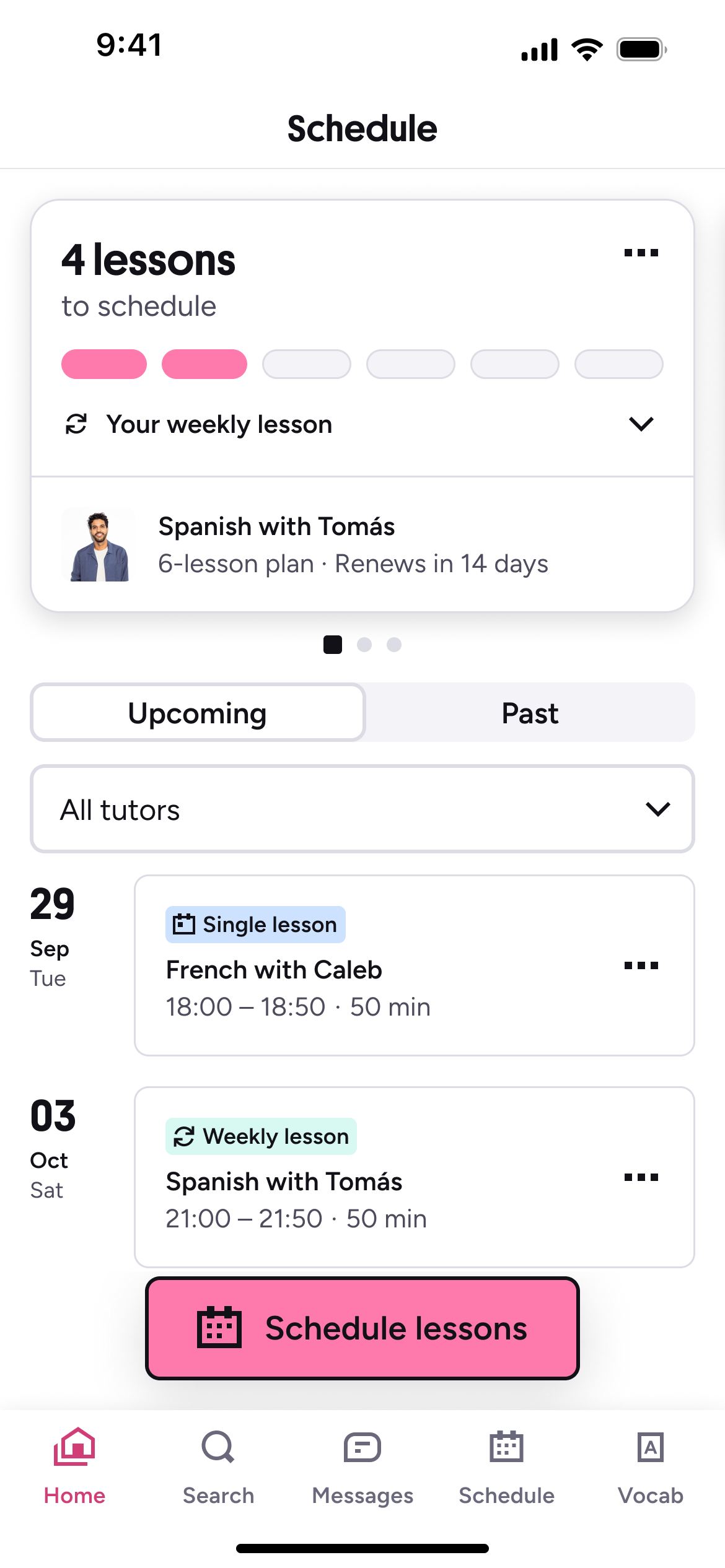
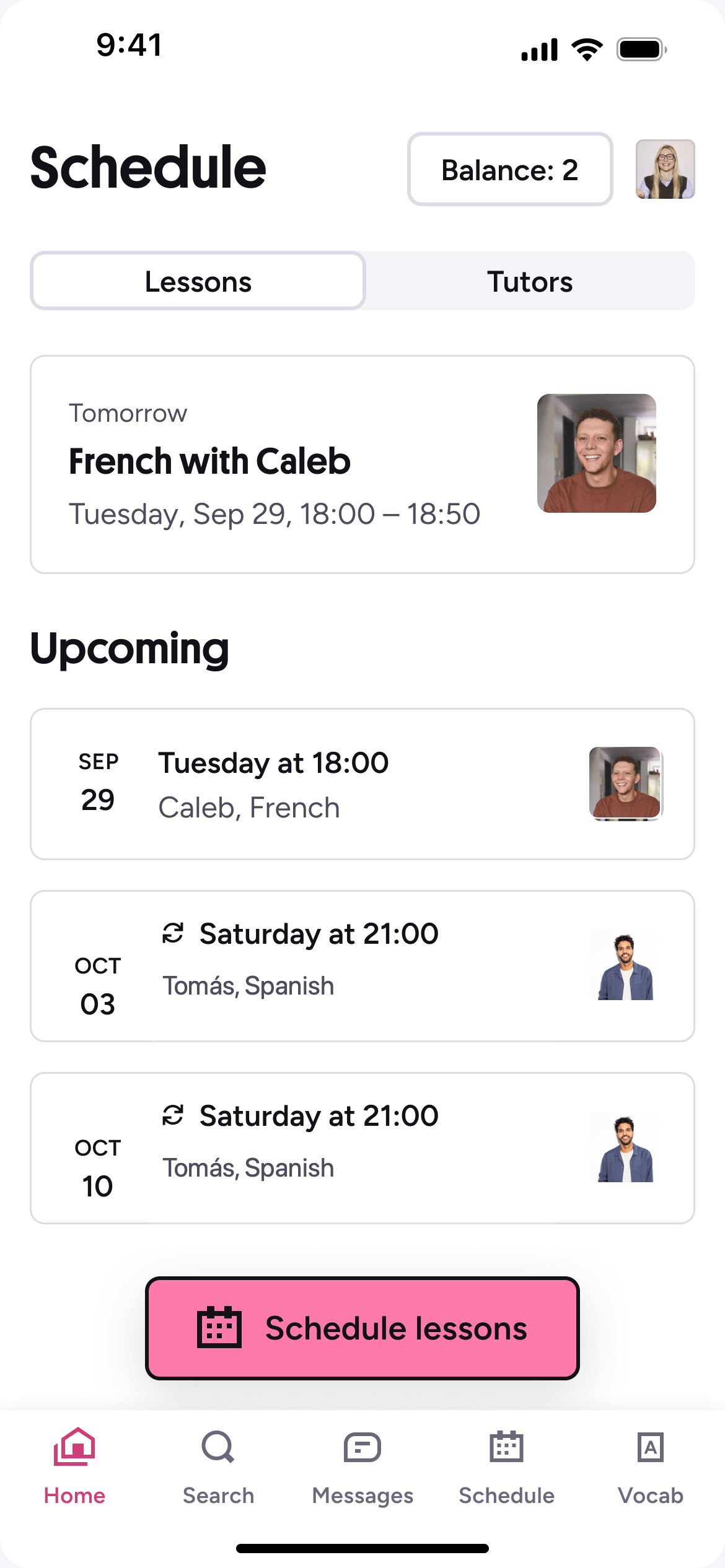
Drag the divider to compare before and after, or toggle Balance to inspect the detached menu it replaced.
Rescheduling and cancelling directly on the grid
Making booked calendar cells interactive lets learners reschedule inline, while tailored plan-limit dialogs replace dead-end errors. Underneath, separating 'this lesson only' from 'all weekly lessons' lifted visibility from 5% to 61%, cut weekly cancellations by 7.8%, and raised scheduled hours by 2.2%.
Preplypreply.com/scheduleReschedule straight from the booking grid—inspect a booked slot, pick an open time, and confirm with a quick note.
Closing gaps across onboarding, validation, sync, and missed lessons
I extended the same patterns across onboarding, two-tap tutor change approvals, calendar sync, and missed-lesson recovery.
Preplypreply.com/onboardingRight after checkout, three story cards introduce schedule fit, 12-hour flexibility, and weekly momentum before first booking.
What this work taught me
- Prototyping settles debates faster than slide decks. Using AI-assisted code prototypes to pressure-test tricky booking edge cases aligned PMs and engineers in days rather than quarters, giving us clear behavioral evidence before touching production code.
- Business health holds when learners keep control. Forcing tutor switches during temporary empty weeks eroded trust, just as hiding single-week rules drove full plan cancellations. Honest, lightweight recovery options kept more credits active without trapping people.
- Above-the-fold hierarchy decides adoption. Wherever we compromised and tucked key balance or recovery prompts further down on smaller screens, engagement dropped immediately. Testing real responsive breakpoints early exposed layout blind spots static Figma frames hid.
- Shipping incremental wins builds trust for system change. Proving retention and scheduled-hour lifts on Limited availability and Cancel one vs. all first gave leadership the confidence to take on the broader Schedule page overhaul.